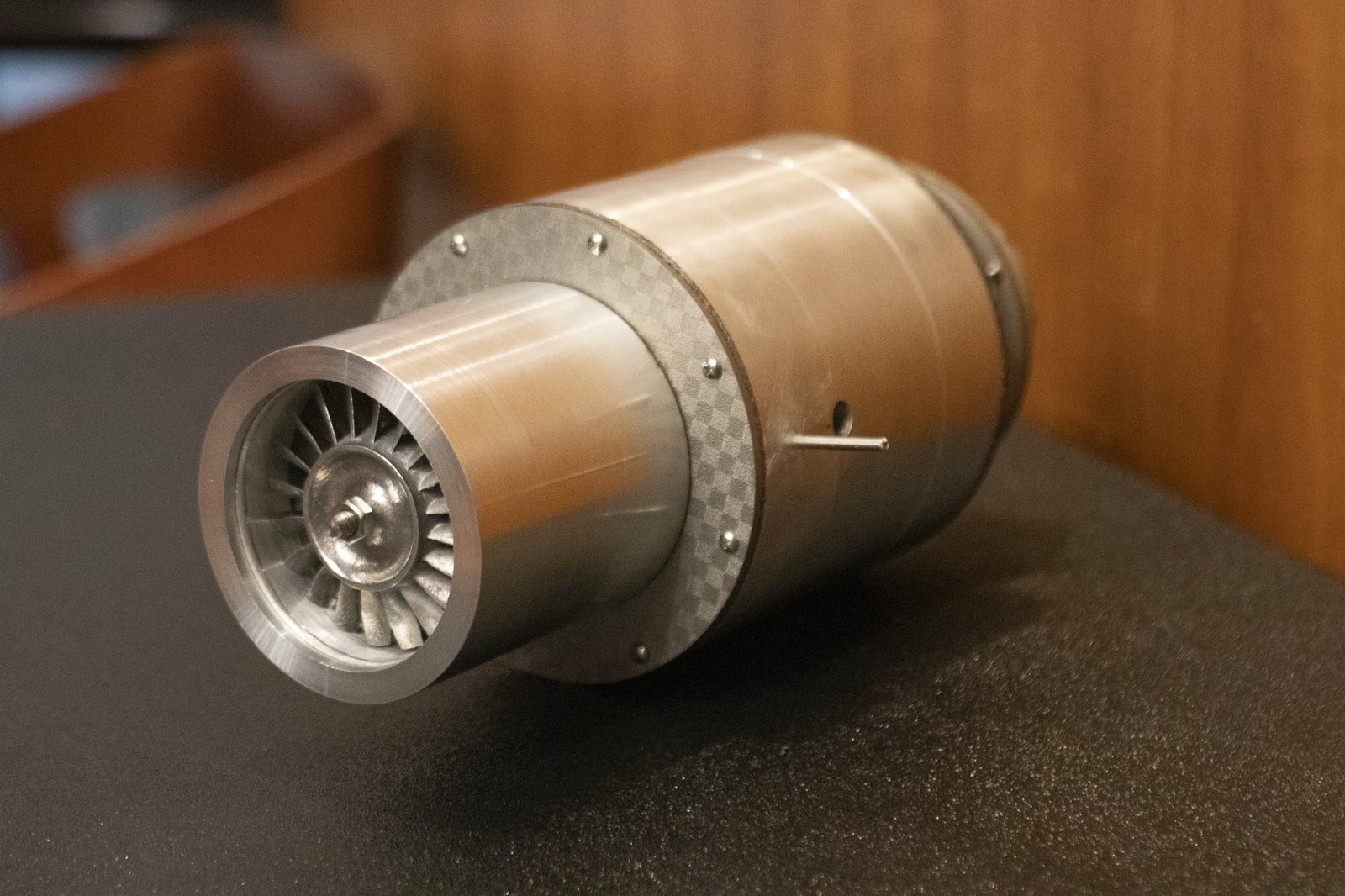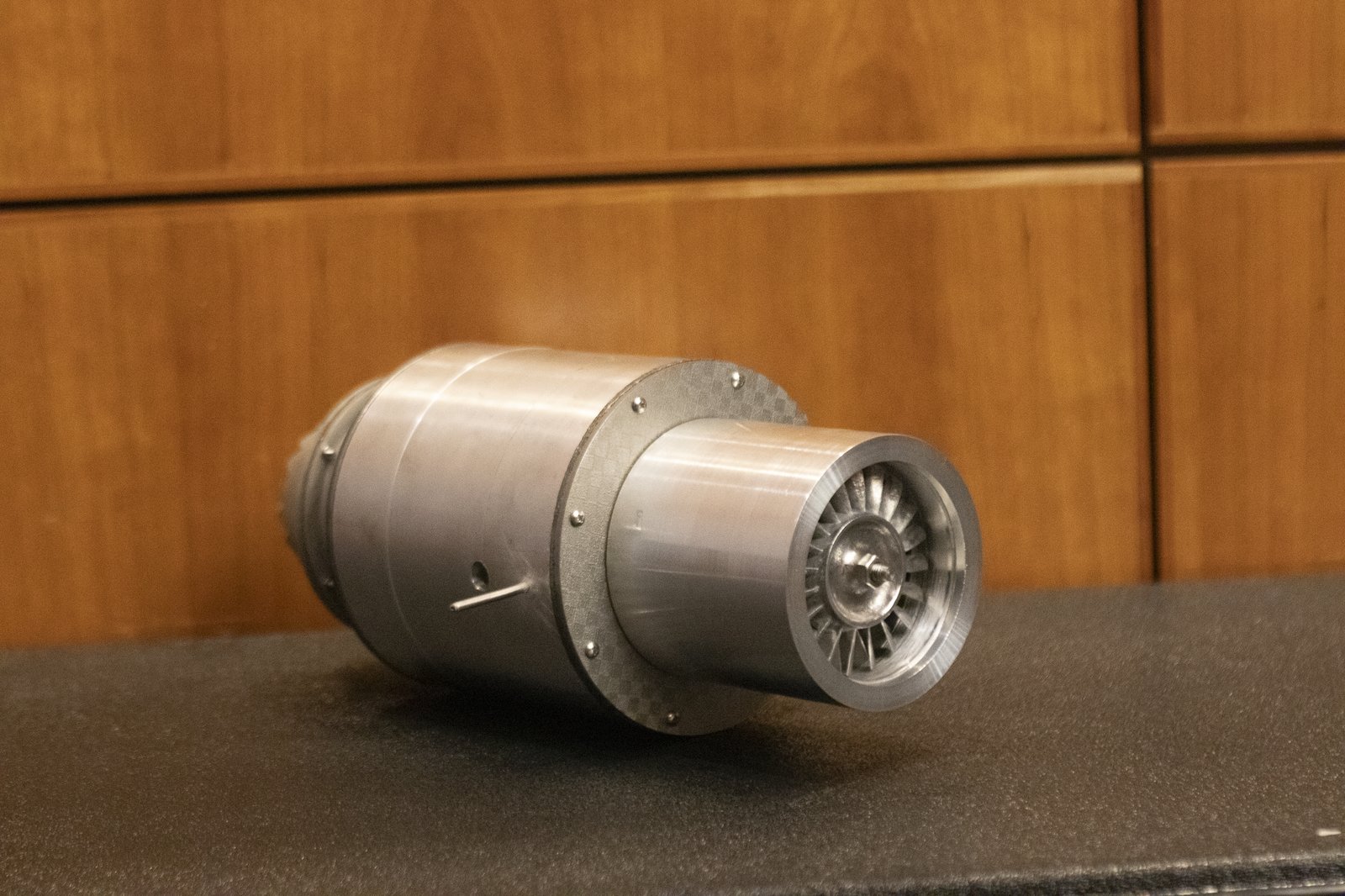
Overview
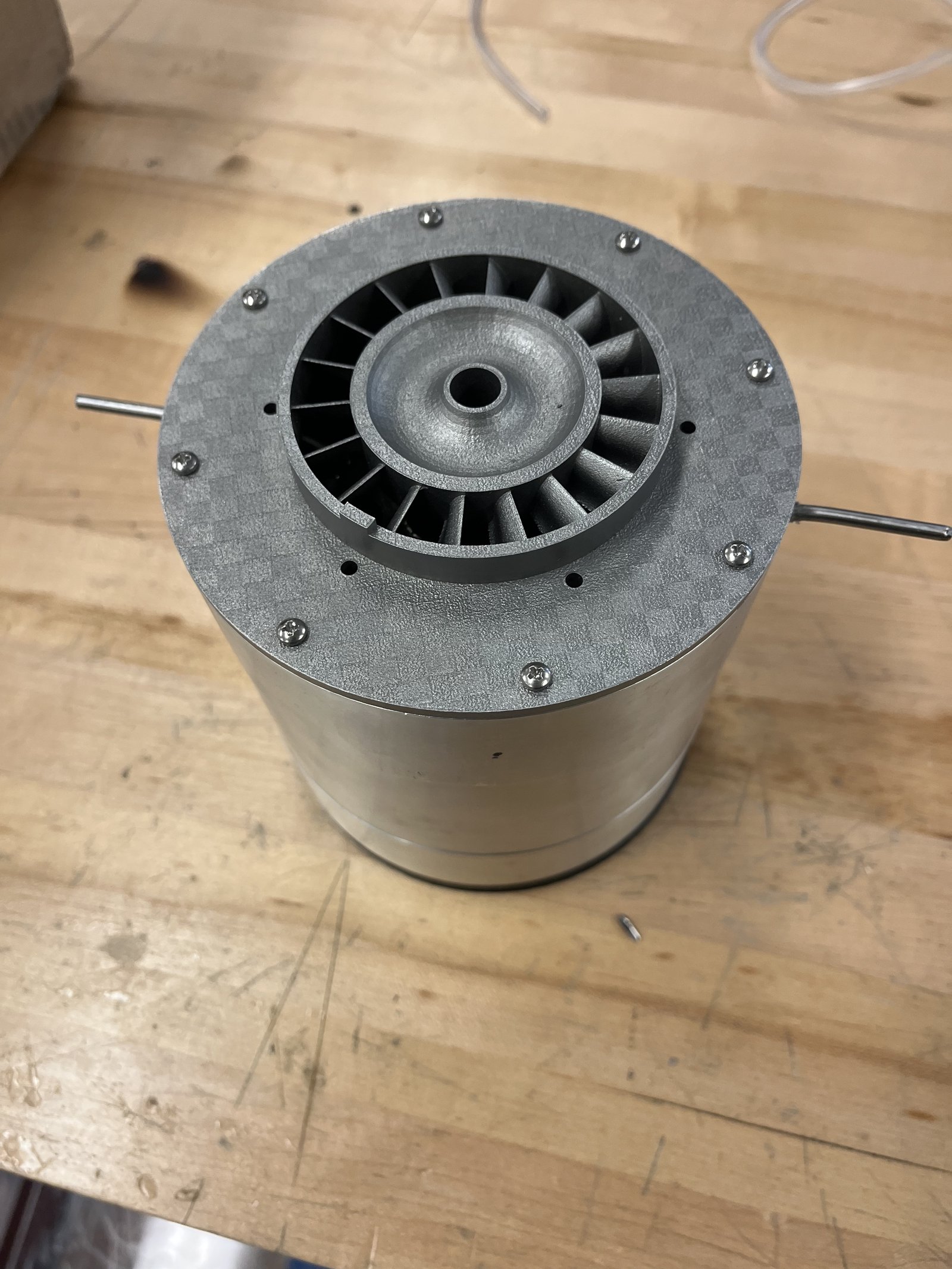
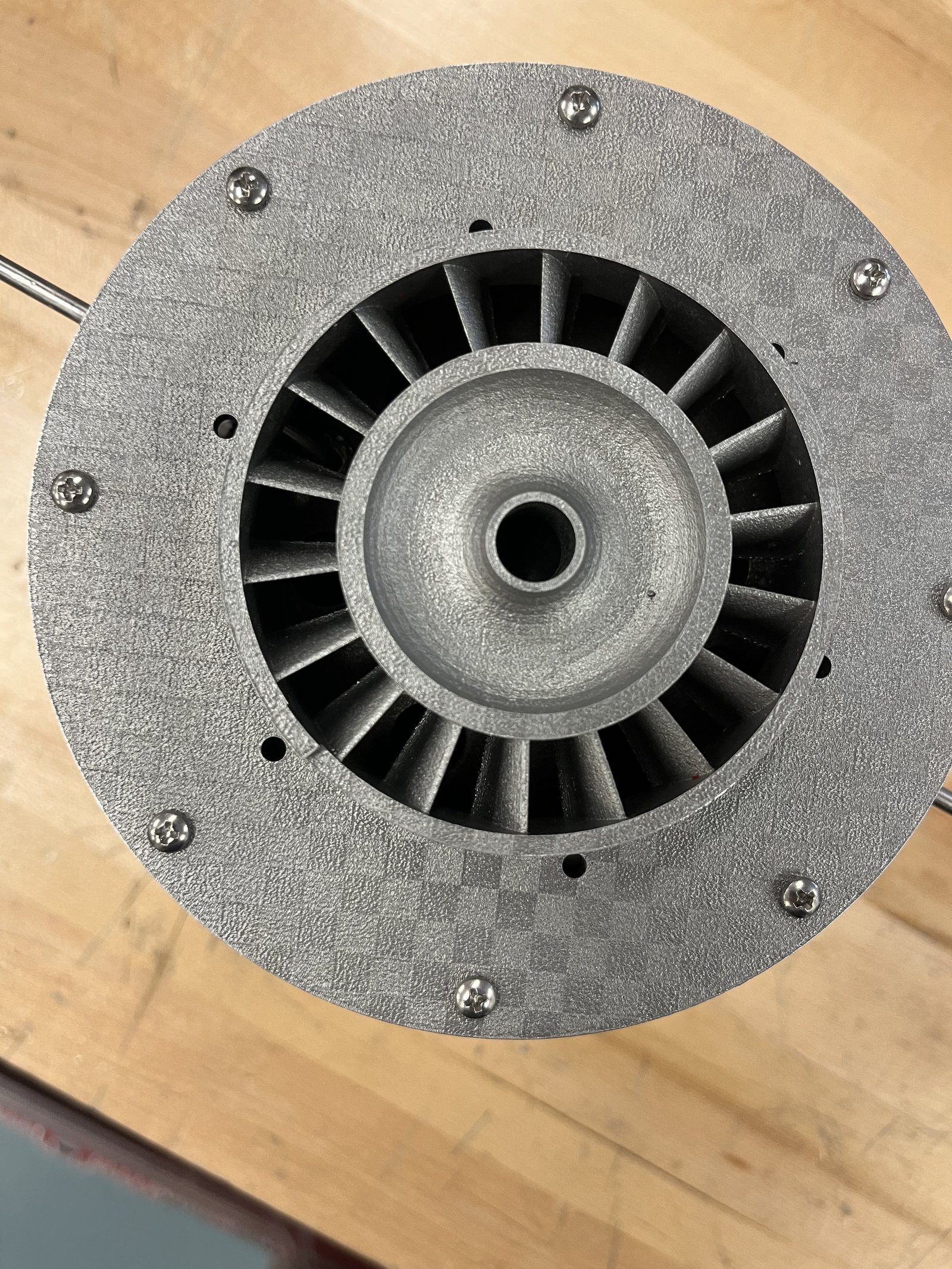
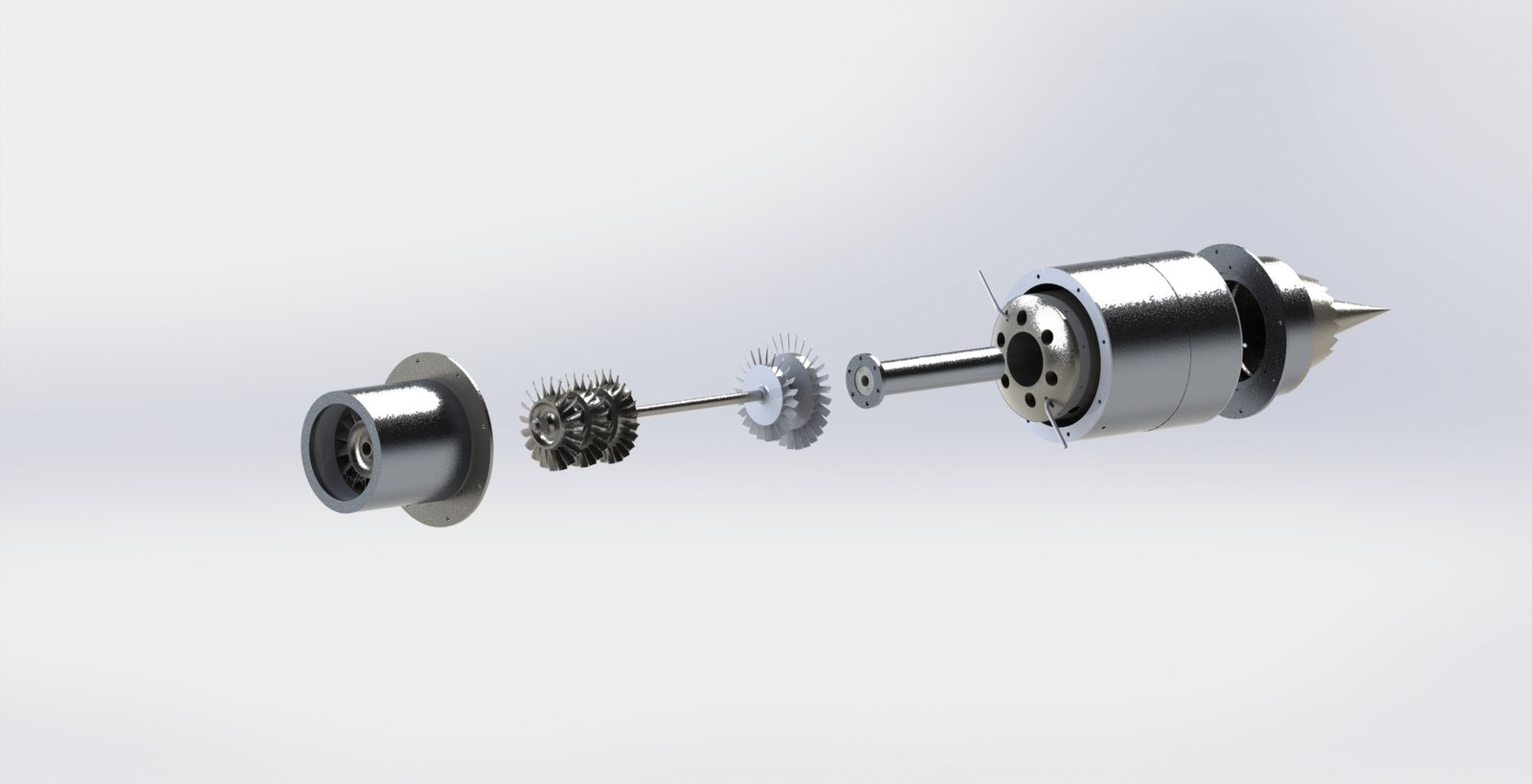
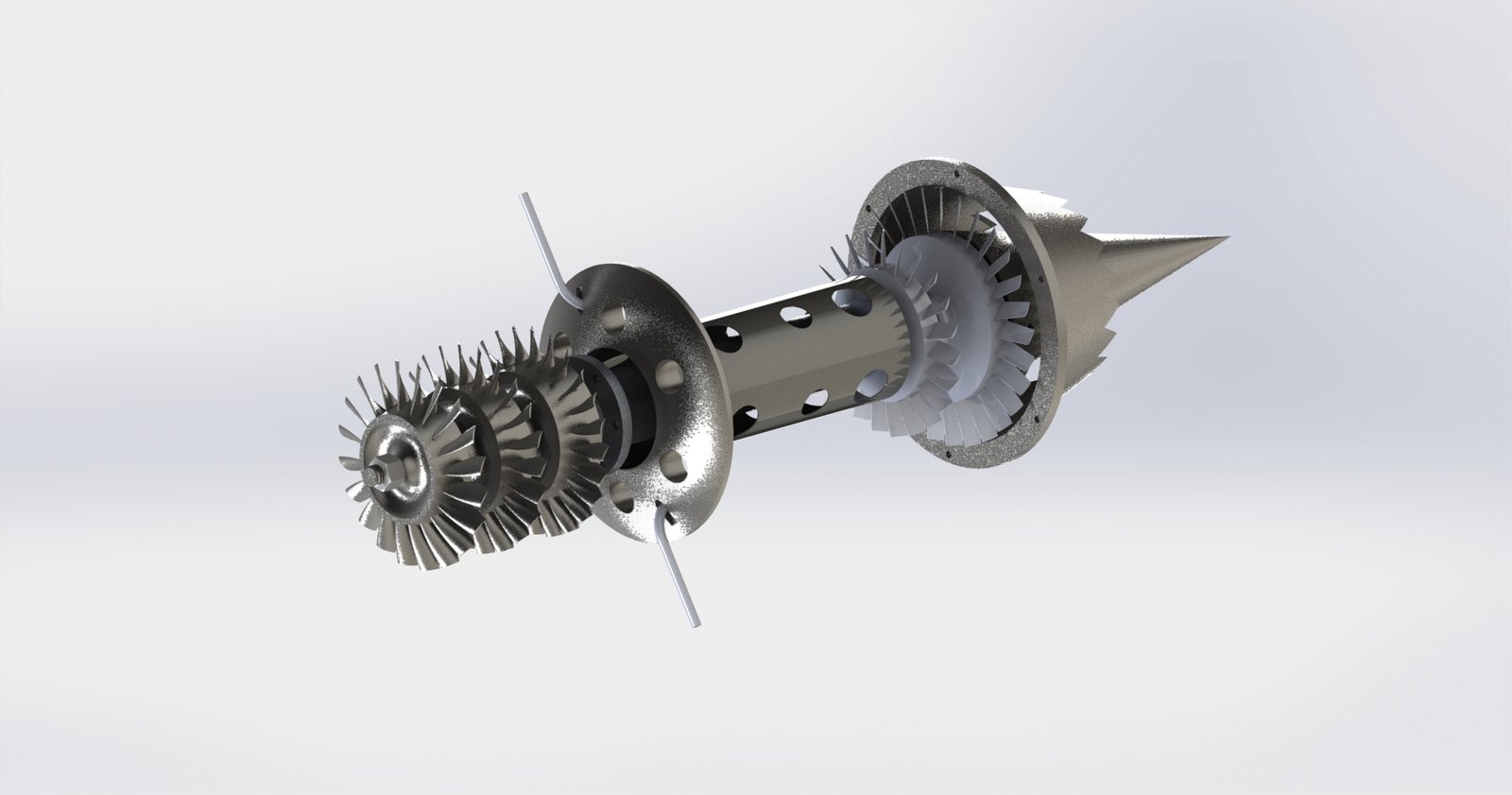
Most student-built jet engines are centrifugal, which means simpler aerodynamics and more forgiving tolerances. We chose the axial route deliberately: it's the architecture full-scale propulsion engines use, and it requires solving blade aerodynamic profiling, rotordynamics at 80,000 RPM, thermal management around the combustor, and tolerances tight enough for stable operation at full speed.
Engineering
I led the propulsion team through the full cycle: thermodynamic cycle analysis to size the engine, aerodynamic design of compressor and turbine stages, structural verification of rotating components, and combustion design targeting stable operation across the throttle range. Performance analysis and simulation across thermodynamics, fluid mechanics, and combustion drove iteration on efficiency, thrust, and thermal margins.
Manufacturing
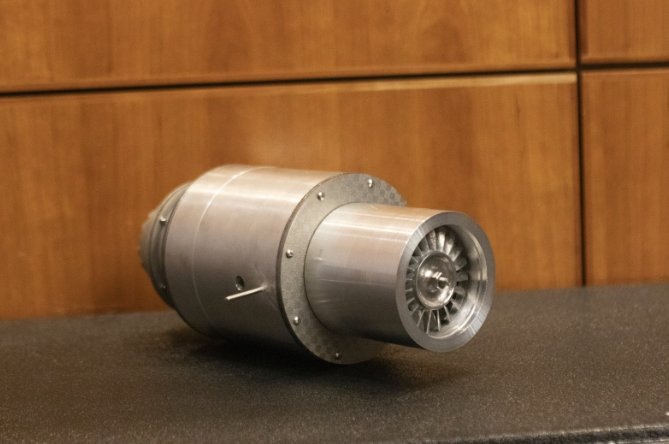
I also managed manufacturing planning and execution. The engine combines milled, turned, and additively manufactured components, all dimensioned with rigorous GD&T so that parts built by different students on different machines actually assemble into a balanced rotating machine.