Overview
A Stirling engine is a demanding first machine: it produces so little power that any excess friction, misalignment, or leakage stops it from running. The displacer and power piston must run nearly frictionless in their bores while still sealing, which makes the whole project an exercise in tolerance design before it's an exercise in machining.
Design for manufacturing
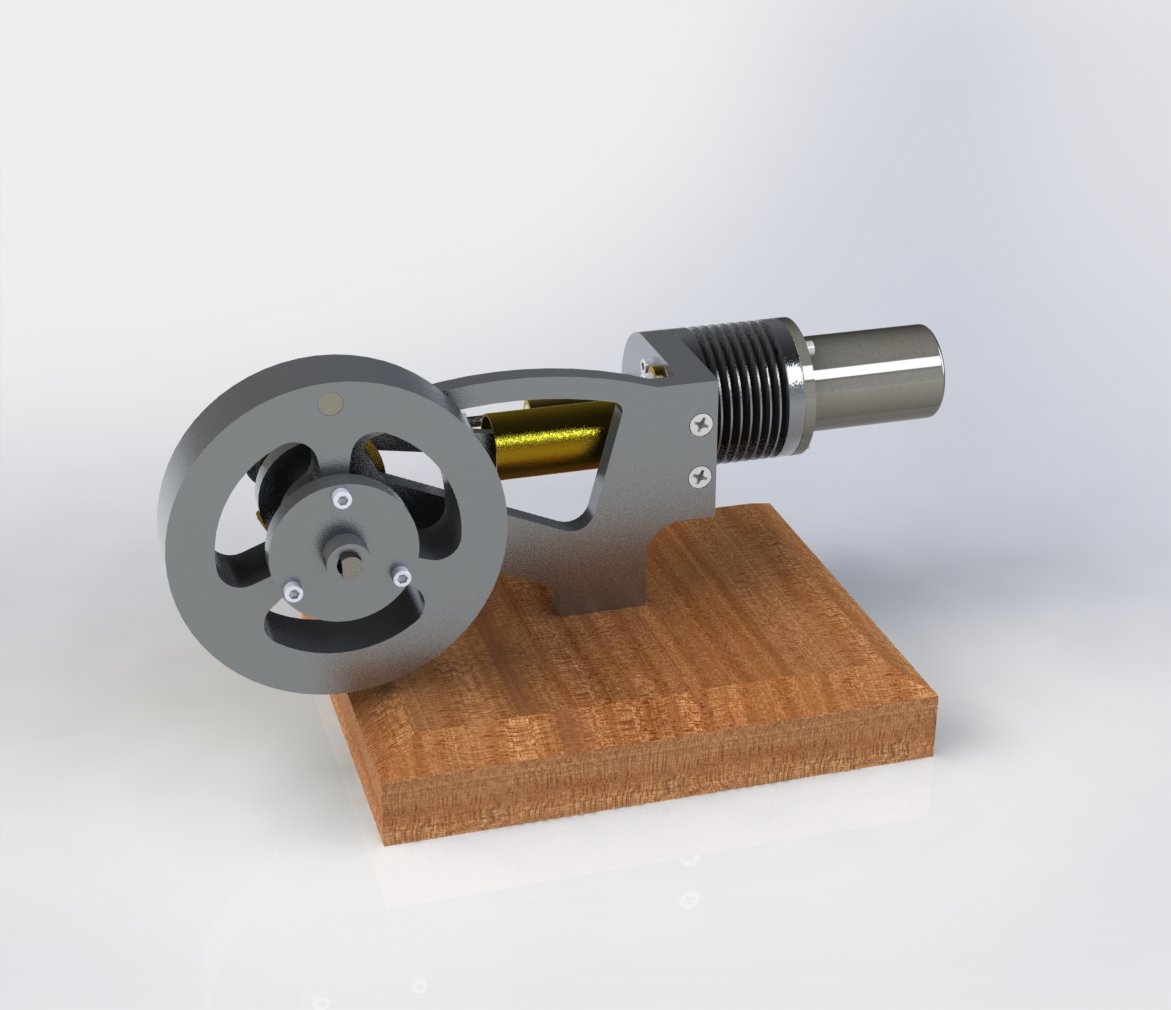
I modeled the full assembly in SolidWorks and built the manufacturing plan around a GD&T tolerance stackup: identifying which fits actually govern whether the engine runs, allocating tolerance where the machines could hold it, and loosening everything that didn't matter. Fits between the piston, cylinder, and crank determined the machining sequence.
Build
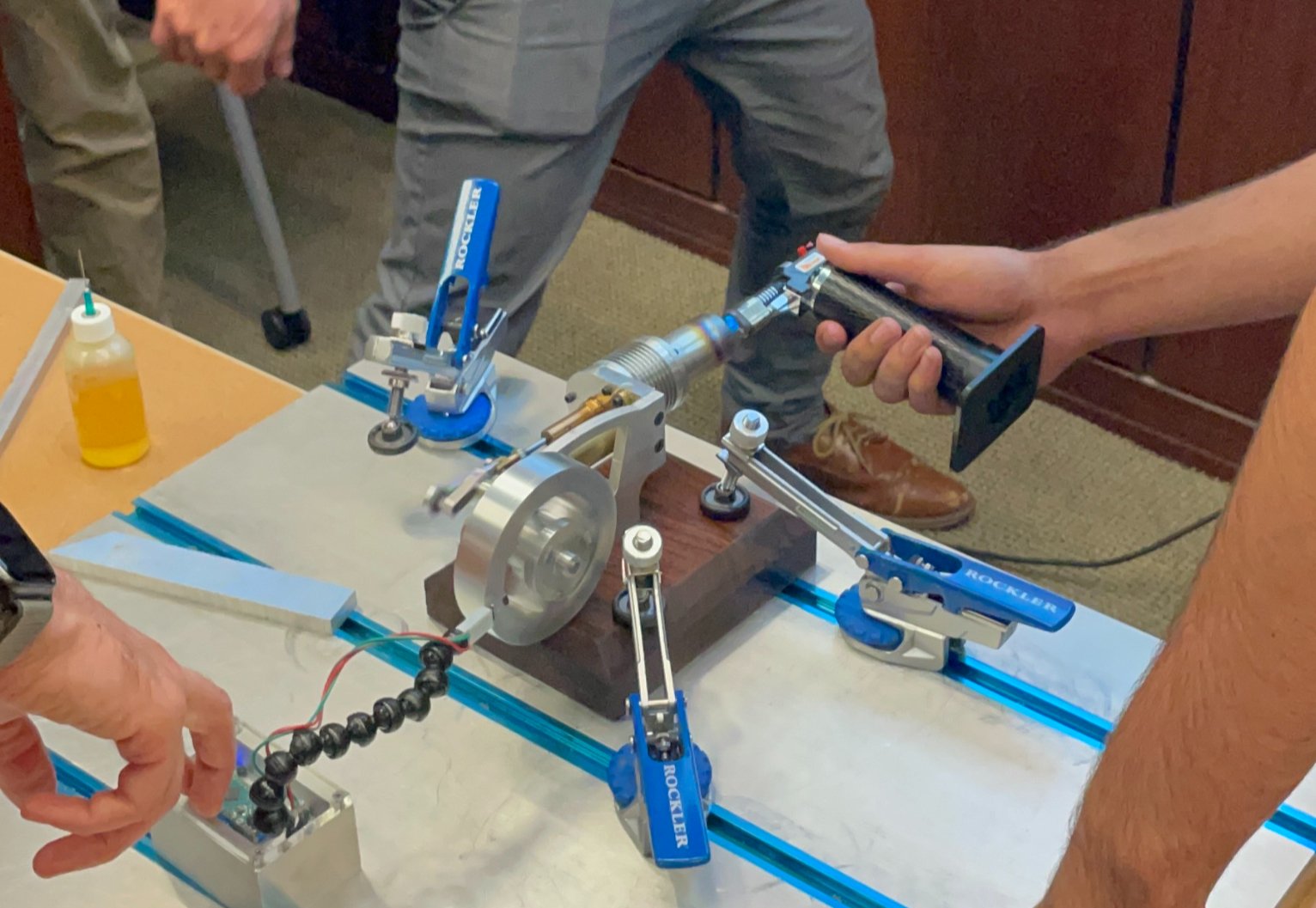
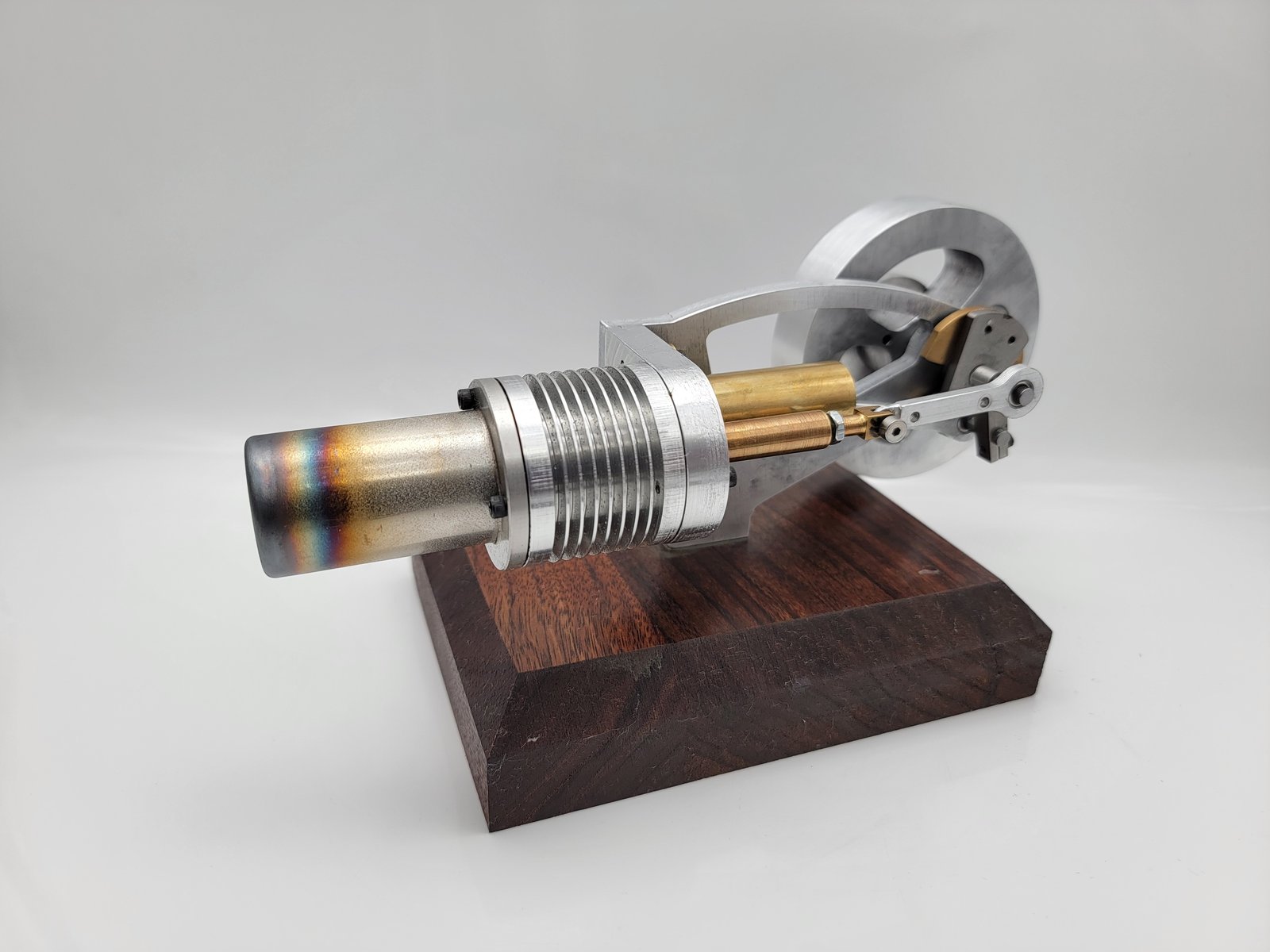
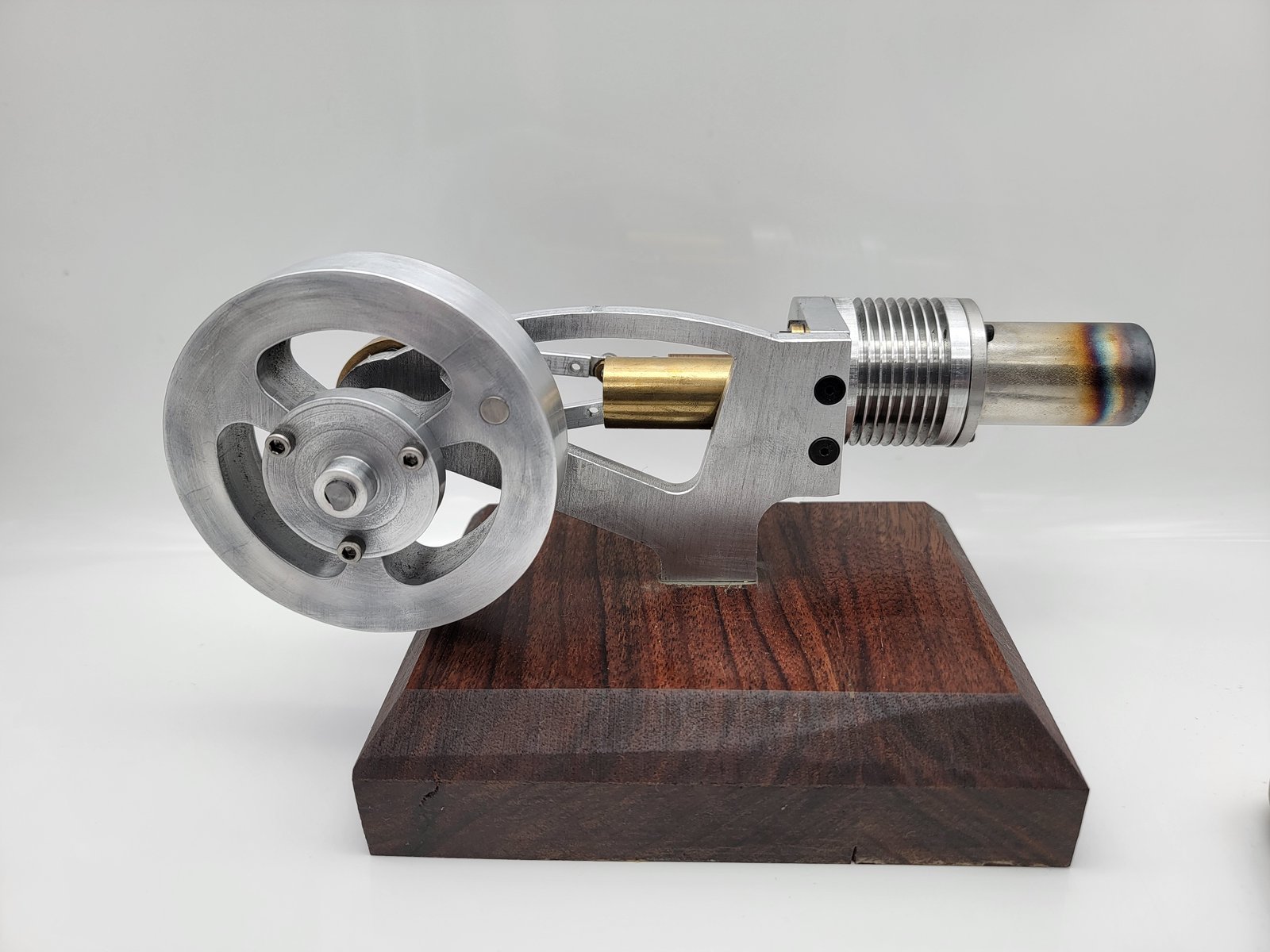
All 18 parts were machined and assembled in-house on CNC mills and lathes across four materials: aluminum, brass, stainless steel, and walnut. The finished engine runs from the heat of a small flame.