Why detonation
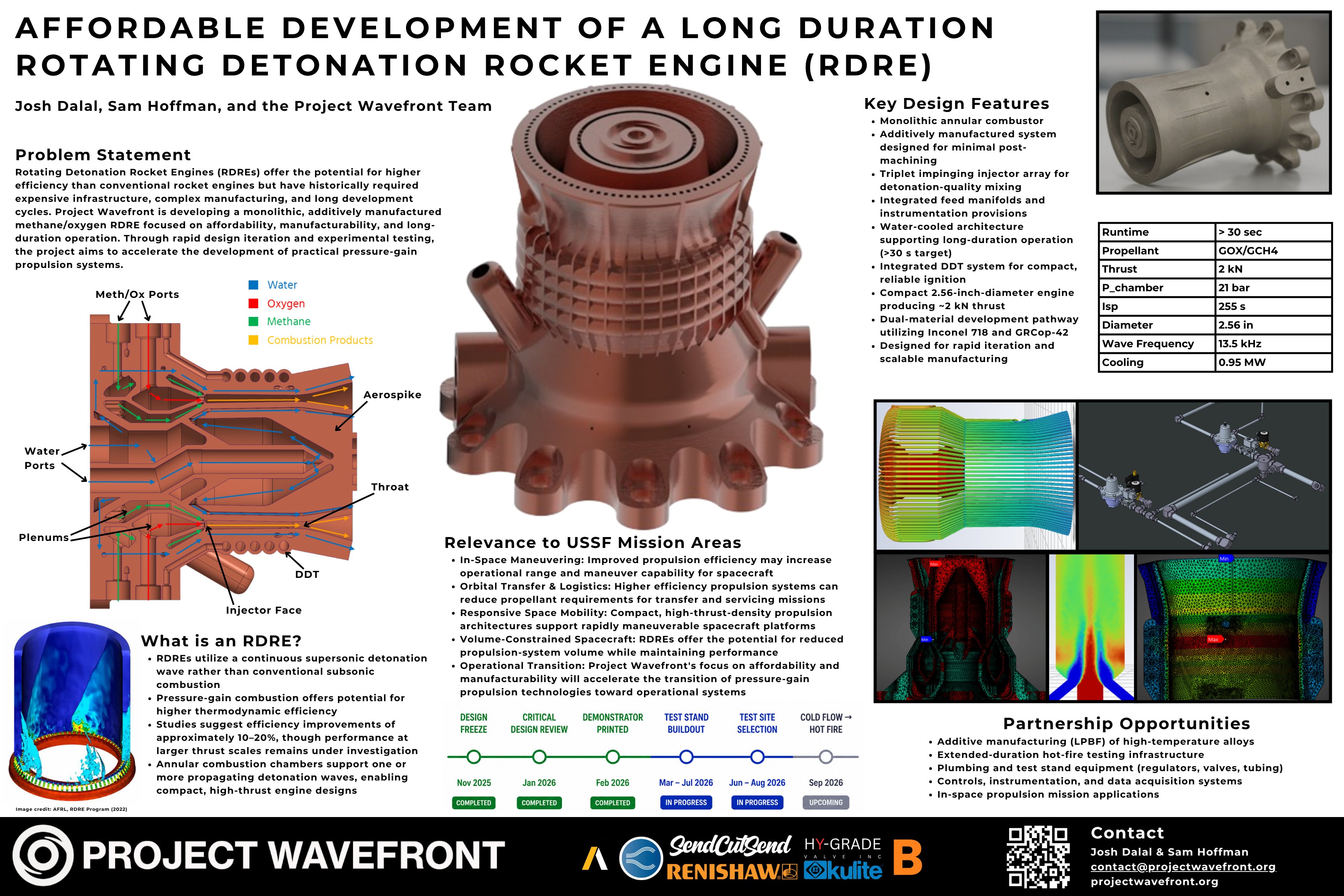
Conventional rocket engines burn propellant through subsonic deflagration. An RDRE instead sustains one or more detonation waves traveling continuously around an annular chamber. Studies suggest this pressure-gain combustion can improve thermodynamic efficiency on the order of 10–20%. The catch has always been cost: RDREs historically demand expensive infrastructure, complex manufacturing, and long development cycles.
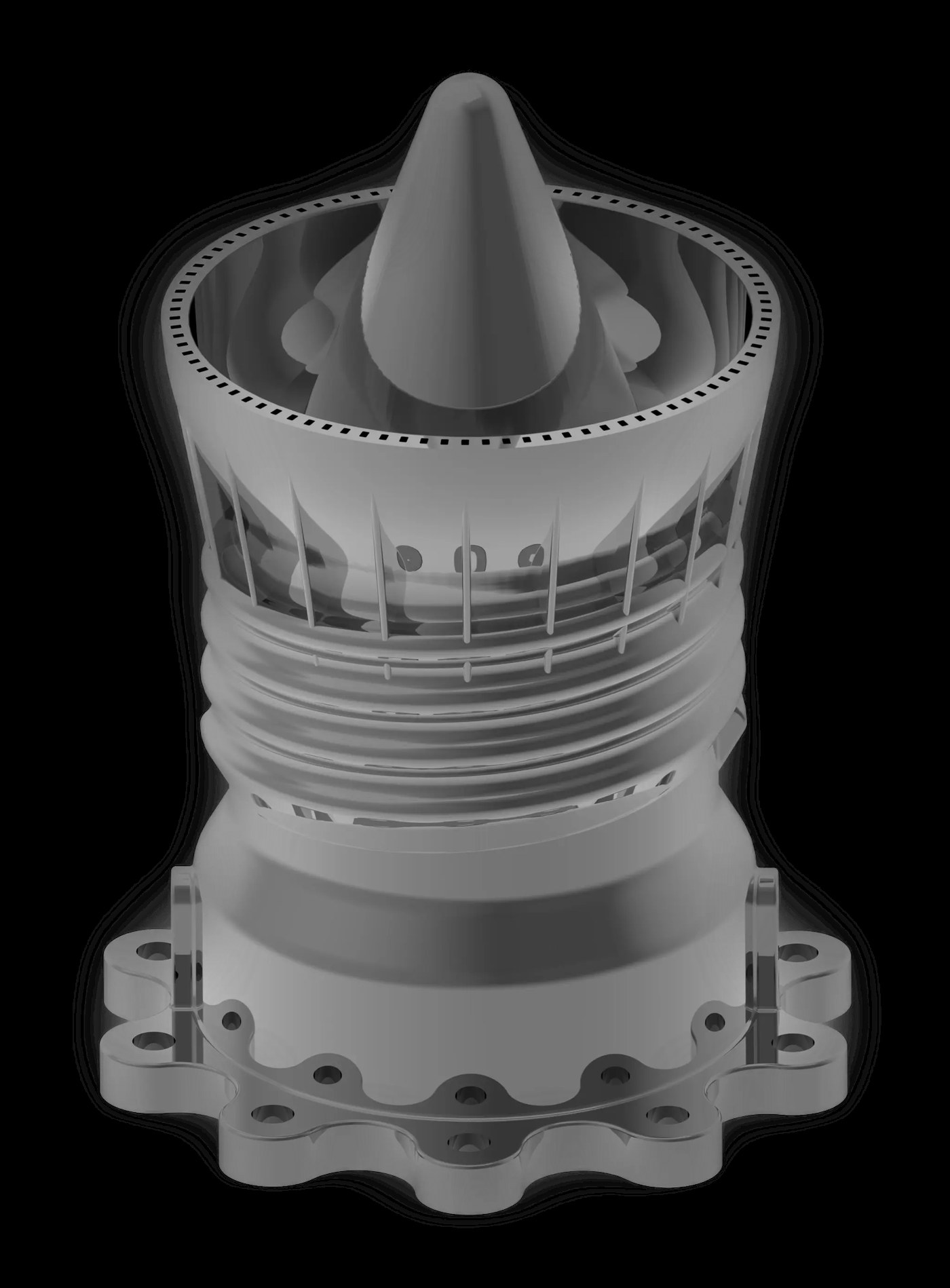
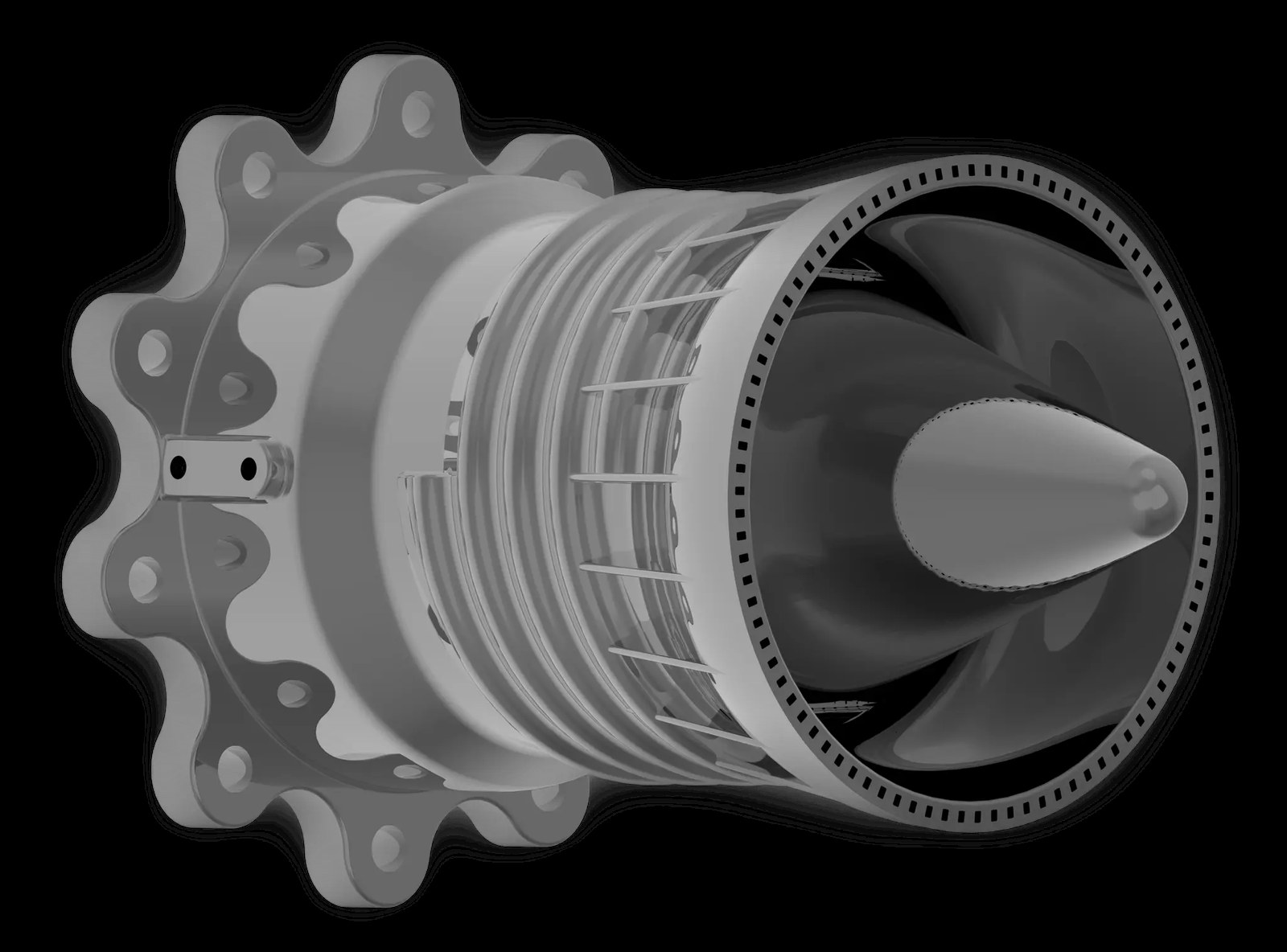
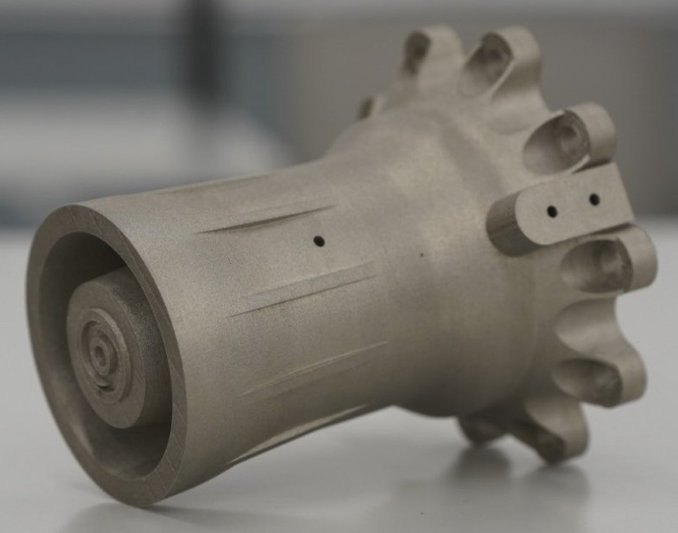
Project Wavefront targets that cost problem directly. The Mark I is a monolithic, additively manufactured methane/oxygen engine designed for minimal post-machining, rapid design iteration, and long-duration operation, a development pathway meant to accelerate pressure-gain propulsion toward practical systems.
The Mark I
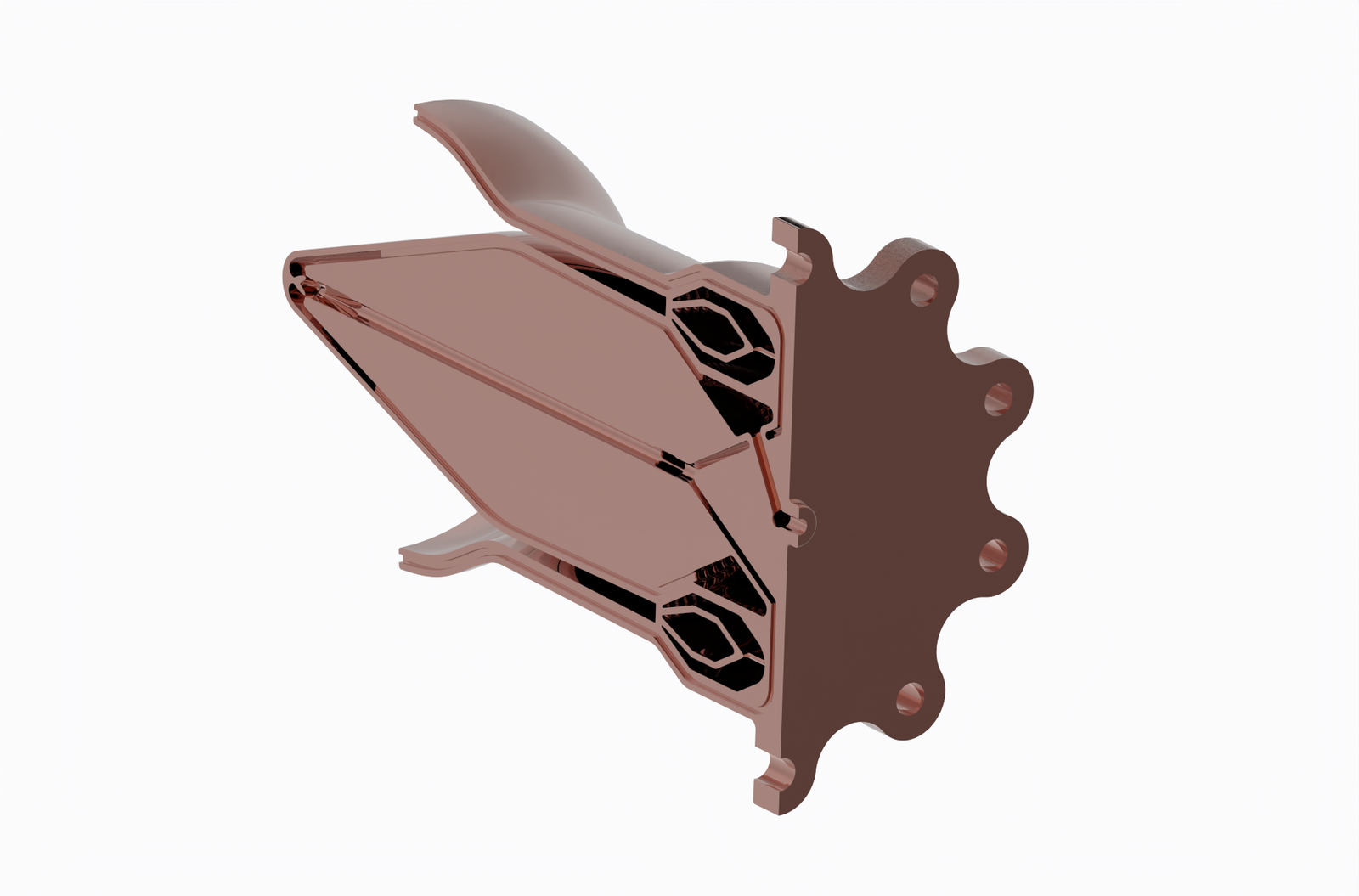
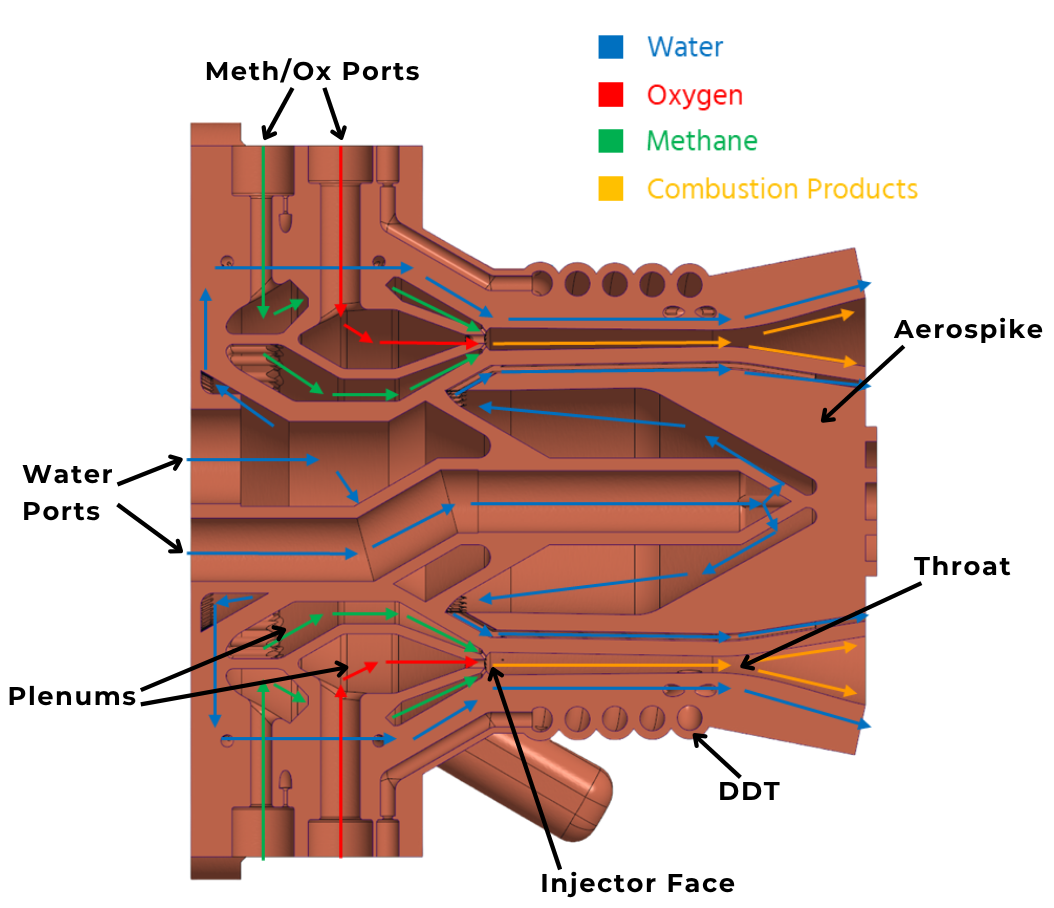
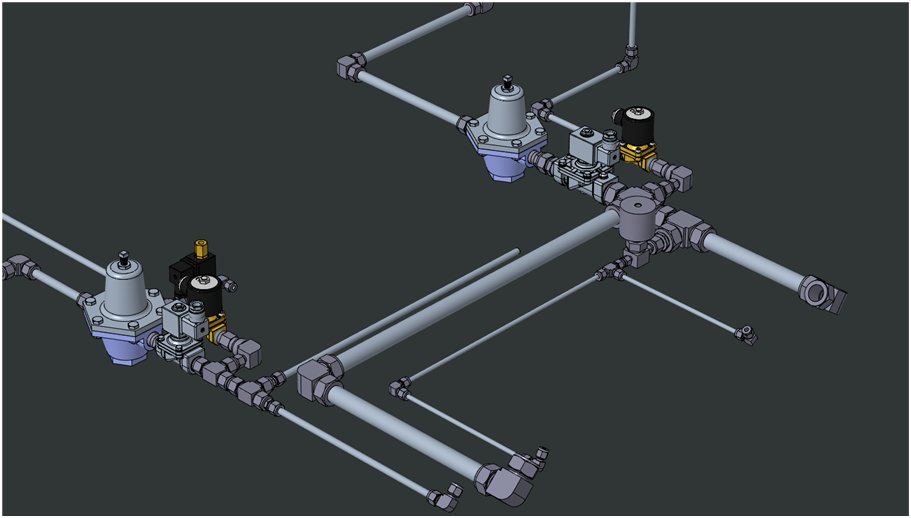
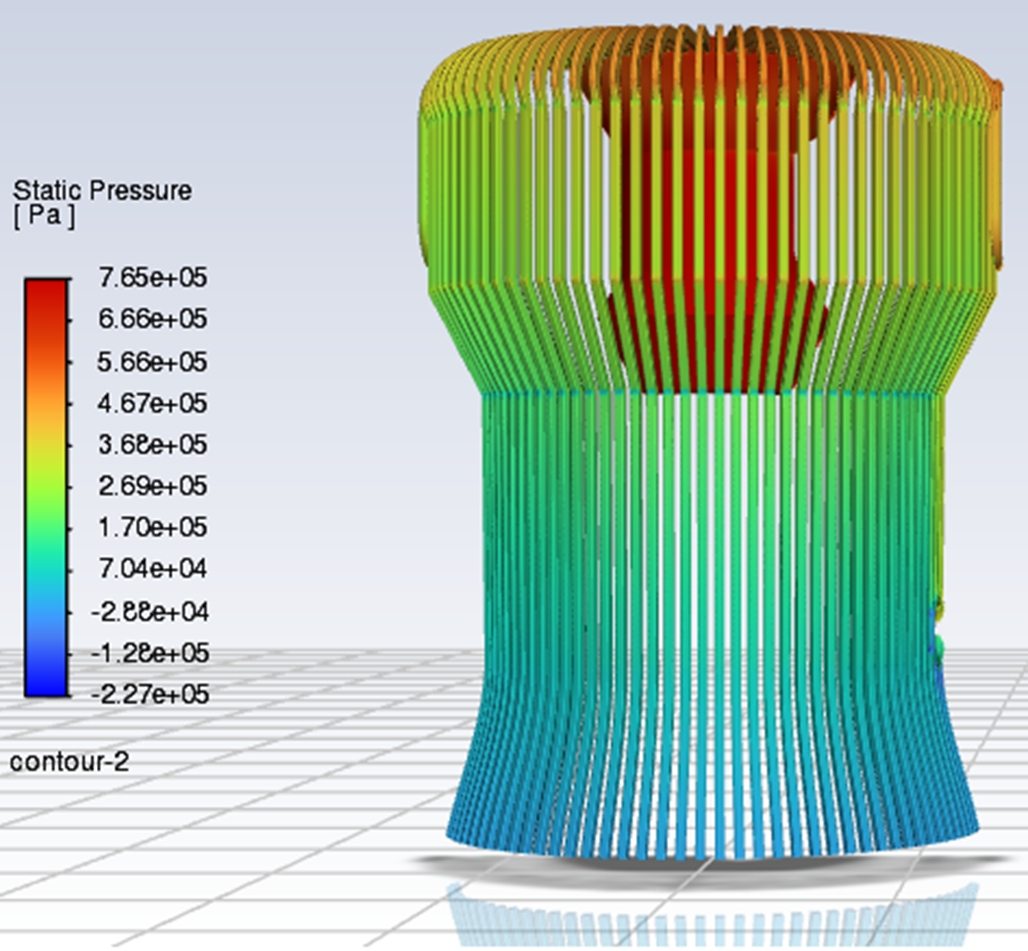
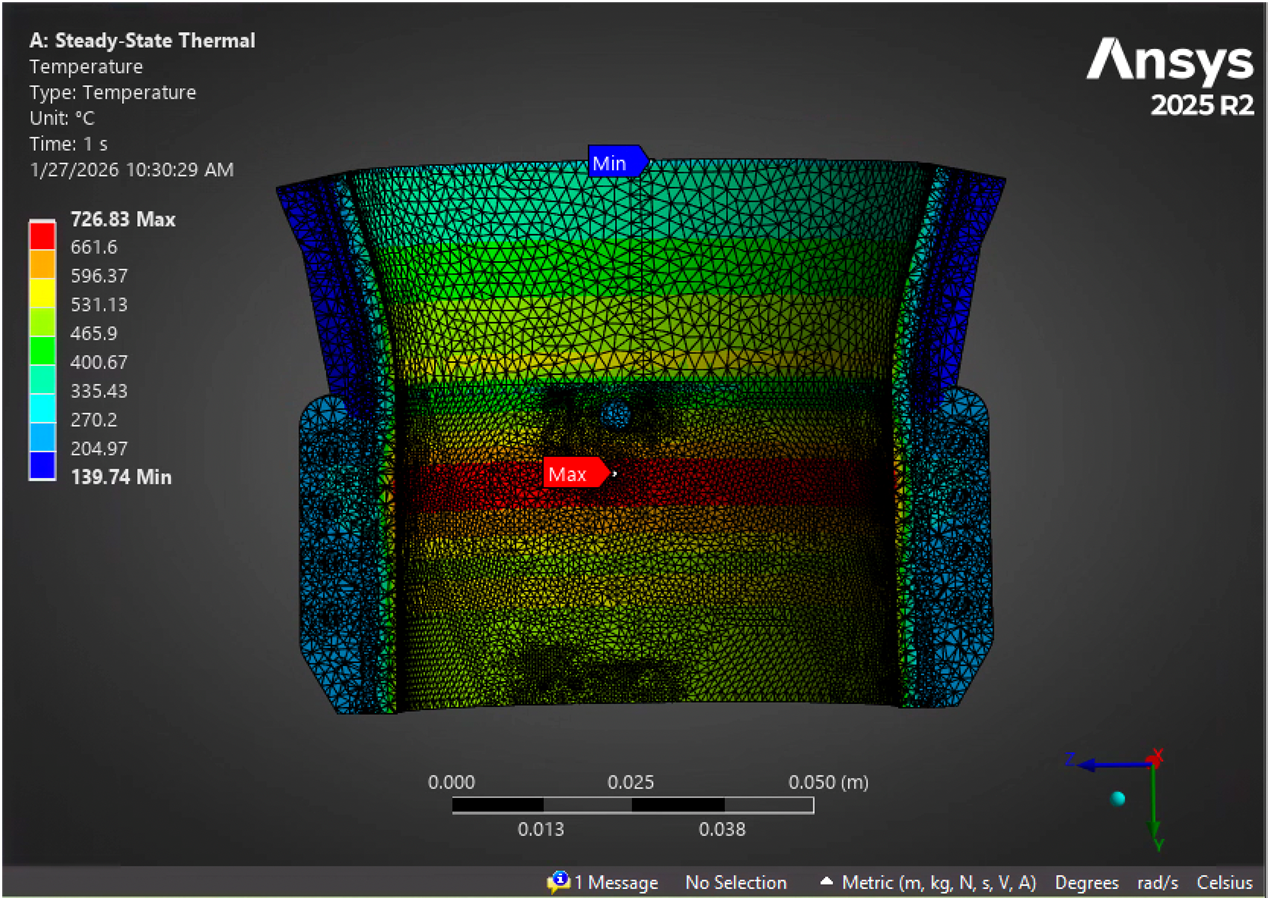
The engine is a compact 2.56-inch-diameter annular combustor producing roughly 2 kN of thrust at 21 bar chamber pressure, running GOX/GCH₄ at an O/F of 3.0 and 0.8 kg/s total flow. An array of 70 triplet impinging injectors (fuel–oxidizer–fuel, 50° impingement) provides detonation-quality mixing, fed through sonic metering orifices that hold mass flow steady regardless of downstream chamber pressure. An integrated deflagration-to-detonation transition (DDT) system handles ignition, and a water-cooled architecture rejecting ~0.97 MW supports run times beyond 30 seconds. Feed manifolds and instrumentation provisions are printed directly into the part, with a dual-material development path through an Inconel 718 heat-sink article and an actively cooled GRCop-42 build.
My work
As propulsion engineer I own much of the engine's fluid and combustion design: transient CFD of the impinging injectors, injector flow-distribution studies and orifice geometry optimization, feed-line thermal and Joule–Thomson analysis, and blast-overpressure safety analysis for the test site. That work raised the metering-orifice discharge coefficient from 0.81 to 0.985, held injector-to-injector flow variation under 2%, and cut coolant-channel pressure drop from 130 to 42 psi at the ~0.97 MW heat load while holding peak wall temperature near 575 K. On the organizational side I co-founded the nonprofit itself: fundraising, sponsorships, vendor relationships across the feed-system supply chain, and the procurement program for the test stand now in buildout.
Status
Design freeze (Nov 2025), critical design review (Jan 2026), and demonstrator printing (Feb 2026) are complete. Test stand buildout and test site selection are in progress, with cold flow and hot fire targeted for late summer 2026. The project was presented at the USSF University Consortium Symposium in June 2026.